Showing posts with label Alaska. Show all posts

Wednesday, March 13, 2013

Life Off the Grid

By Leslie Hsu Oh

After living in Alaska for seven years, Leslie Hsu Oh returns to the Washington, D.C., area with a wealth of adventures from the Last Frontier. Her work appears in Cirque, First Alaskans Magazine, Fourth Genre, Kids These Days!, Rosebud Magazine, Stoneboat, and Under the Sun. “Between the Lines” was listed as a Notable Essay in The Best American Essays 2010. She received an MFA in creative writing from the University of Alaska Anchorage, where she currently teaches, and a master’s from Harvard University. Check out her web site (www.lesliehsuoh.com) or find her on Facebook.

On days when I’m stuck in traffic or playing with my kids in a tiny neighborhood park trimmed with identical tract homes, I imagine living in Trapper Creek, Alaska.

While snow machining there in March 2011, my husband and I met Hal and Nancy Morgan. The Morgans are an energetic retired military couple, who decided to spend their remaining days living off the land. Hal generously invited us to swing by on our snow machines (in the winter there is no way to drive to his homestead) and run his dogs before we headed back to Anchorage.

After getting lost on several frozen lakes, we found a bumpy trail that wound its way through the trees until it opened into a haven of log cabins hidden deep in the woods beside Kroto Creek. Apart from dogs barking and launching themselves into the air against their leashes, the homestead was wonderfully quiet. The Morgans were not home. While they claim that they “have no idea what they are doing,” it was clear that it took a tremendous amount of work to live off the grid. Thomas stared at the water pump, the outhouse, the stacks of chopped wood and asked me, “Are you sure you want to live like this?”

This is the main cabin where the Morgans live.

Notice the notepad hanging on the
door frame where we left a note for
the Morgans the first-time we visited.
With stars pooling in my eyes, I breathed, “Yes. It’s so romantic.”

Thomas rolled his eyes and said, “Good luck with that.”

An hour later, a few miles from their homestead, our truck along with four other cars slid on an ice patch. The snow machines, trailer, and our truck was damaged, making our weekend adventure a disaster I’m still trying to pay off.

There was no way Thomas would ever head back out to Trapper Creek.

But the offer to run Hal’s dogs nagged at me, especially knowing that later that year we were moving to Northern Virginia. I begged Thomas to let me take the kids to visit the Morgans. I argued that this was my last chance before the snow melted away. Plus, our five-year-old daughter’s favorite subject in school was Balto, the Siberian Husky sled dog famous for running the diphtheria antitoxin to Nome in 1925.

He reluctantly conceded. It was the first-time I ever took my kids (then 5 and 2 years of age) on an overnight trip without my husband.

While my nerves were a wreck on the drive up, as soon as I was on a snow machine heading for the Morgans' homestead, a smile stretched across my face so wide, it hurt.

The sun glittered off a traffic jam of snowmachines and sleds cluttered about the front of the main cabin. A dozen huskies lounged on handmade dog shelters lining each side of a wide trail which connected all the cabins. Kyra and Ethan disappeared down this trail into smaller passages carved into the deep snow. I could only the see the tips of Ethan's dragon hat bouncing up and down as he ran away from me.

Hal Morgan patiently introduces the dogs to my kids.

Deep passages cut into the snow leads to the
water pump and other equipment needed
to survive off the grid.
The dogs entertained the kids for four hours or maybe it was the other way around. Kyra and Ethan hardly paid any attention to me. In the distance, I watched the kids help Hal harness four dogs and hook them up to a sled. When they lost interest, they crawled in and out of the dog shelters while the dogs watched them nervously.

Hal's wife decided that it was too dangerous to let the kids mush so she encouraged me to give it a try.

The only instructions Hal offered were: “Hike to go. Haw to turn left. Gee to turn right. Whoa to stop.”

I stepped gingerly onto the runners and gripped the handlebar with my left hand. Reaching down with my right hand, I lifted the snow hook. The hook was barely loose when the sled took off.

Wind chafed my cheeks as the dogs picked up speed. Every bump, every rut, felt like it could knock me to the ground. I tried to relax and read the contour of the frozen earth. Suddenly, one of the dogs tripped and rolled off the trail, tumbling the rest of the team. Somehow, they got back on their feet and kept running as if nothing happened. I love that thrill of not knowing what’s going to happen next.

Leslie mushes the Morgans' dogs onto a frozen lake.
We broke out of the woods and onto a frozen lake. I was on center stage, like I had finally arrived at the performance of my lifetime. The dogs panted hard. They barked. The ice scraped like nails on chalkboard. But inside, all was strangely quiet. I couldn’t hear my heart, my mind churning cautions, muttering about the past or future. I couldn’t hear anything. Just peace.

This is what it feels like to be wholly in the present moment. This is what I try to recreate whenever I think about Trapper Creek, Alaska.

Rita Blumenstein, the first certified traditional healer in Alaska and one of the 13 Indigenous Grandmothers, often instructed me that disease can be avoided if we can learn to live in the present moment. She said, “This is how you got to become. Learning to be here and now. We instinctively knew how to do this when we were children and we were busy watching a beautiful butterfly or examining any interesting new aspects of the world. We were completely absorbed by what we are doing. The point of power is in the present moment.”

I will probably never be able to live like Hal and Nancy. At one point, Hal had scratched his beard and told me how expensive and stressful it was to fulfill this dream of theirs. As the local EMT, he said that many people from the city who had tried a life off the grid committed suicide. I don’t know why I still think this lifestyle is romantic. But I do know that there are days when my kids still draw scenes from the Morgans' homestead and I sit at my desk, longing for that peace of living in the present moment.

Kyra and Ethan enjoy a snow machine ride with mom
on the Morgans' homestead.

Ethan gives up on pretending to be Kyra’s lead dog
and decides he deserves a ride instead.


Friday, November 23, 2012

Off the Beaten Track: Native Traditions of Giving

After living in Alaska for seven years, Leslie Hsu Oh returns to the Washington, D.C., area with a wealth of adventures from the Last Frontier. Her work appears in Cirque, First Alaskans Magazine, Fourth Genre (forthcoming), Kids These Days!, Rosebud Magazine, Stoneboat, and Under the Sun. “Between the Lines” was listed as a Notable Essay in The Best American Essays 2010. She received an MFA in creative writing from the University of Alaska Anchorage, where she currently teaches, and a master’s from Harvard University. Check out her web site (www.lesliehsuoh.com) or find her on Facebook. 

My four-year-old son runs down the hall wailing, “Jiĕ Jie [Older Sister in Mandarin] ate all the grapes and didn’t share any with me.” My seven-year-old tries to defend herself, but the evidence is bulging in her squirrel cheeks.

“Kyra, what happened?” I shake my head with disappointment. A year living in the Washington, D.C., area and already they had forgotten an important lesson they learned from Alaska Natives since birth.

When we lived in Alaska, we often relaxed on the benches facing seven 56x32-inch plasma screens in the Anchorage Museum’s Living Our Cultures, Sharing our Heritage: The First Peoples of Alaska exhibit and listened to Elders and youth speak about giving in 10 (Athabascan, Eyak, Haida, Iñupiaq, Tlingit, Tsimshian, Unangan, Sugpiaq, Yup’ik, and Saint Lawrence Island Yup’ik) approximately two-minute video vignettes looping across seven monitors.

Kyra and Ethan share their first harvest
of petrushki, also known
as beach lovage,
with Auntie Rita, a renowned traditional healer
and member of the International Council
of Thirteen Indigenous Grandmothers.
It was my way of simulating the old days, when daily, children could gather at the foot of an Elder after dinner and listen to his or her stories. At a minimum, I hoped that my children could understand the importance of giving, unmarred by the Western expectation for something in return.

In the Yup’ik video, Alice Rearden (Cucuaq Aluskak) speaks about ella, or awareness. Growing up in Napakiak, her Elders taught her “that if you are out walking and see a piece of driftwood sticking out of the mud, you should pull it out and turn it over so that the muddy part can dry. That piece of wood is alive and aware, and it will feel gratitude for your kindness.”

Her features are delicate, but when she speaks, her voice is laced with the weight of more than 12 years of wisdom, gleaned from serving as lead translator for the Calista Elders Council. The video pans to a scene of fish hanging on a dry rack while Rearden says off screen: “We always grew up with that sense, of not putting yourself first or above others. Giving gifts to people, those kinds of, you know, unselfish gestures that you do for people—it will come back in turn.”

Kyra harvests petrushki on the coast of
Turnagain Arm, Alaska. She learns
not to take too much, so other people
and animals can harvest too.
Working with cultural anthropologist Ann Fienup-Riordan, Rearden, who is now 35, translates books such as Ellavut: Our Yup’ik World and Weather, the ninth in a series produced by the Calista Elders Council to document Yup’ik oral traditions. Yup’ik Elders explain that "those who are capable must help those less fortunate through sharing food and doing chores for them. We were admonished: ‘Even though an old woman wants to pay you, you do not receive it.’ When an elderly woman or man is given something or helped, she is extremely grateful and thanks you with enthusiasm. And they give the person who helped them something beneficial, thinking of something in their minds that will aid him positively in his life.

“Yup’ik discussions of the ethics of sharing describe its consequences in terms of its nonmaterial return—the grateful thoughts it elicits.…Today, sharing knowledge is as critical as sharing food in both the transfer and transformation of Yup’ik moral standards. Admonitions to act with compassion and restraint remain foundational not only in Yup’ik interpersonal interaction but in their relations
with their environment.”

In Anchorage, the sharing of subsistence foods has become the warp thread weaving together Native and non-Native communities. While dip-netting, I always collected fish heads from non-Native neighboring fishermen and delivered them to Elders whom I worked with in town. During holiday seasons, the post offices are bustling with ice boxes packed with subsistence foods that are being mailed to the Lower 48.

Every summer, we take the kids dip netting at the mouth of the Kenai River.
The kids help us clean, pack, freeze, and ship salmon to relatives in the Lower 48.

As a mother of three, Kyle (13), Kayla (11), and Christopher (4), Rearden trades ideas with me on how to teach our kids tuvqakiyaraq, the custom of sharing, in an urban setting. Rearden grew up “feeling shame to get more than someone else. Whenever I was asked to share, I always gave the other person a bigger piece. I would cut a candy in half and be ashamed to take the bigger piece.”

She raises her children, who were all born in Anchorage, with these ideas: “The more you give, the more you get back. If we are stingy, like if you don’t share your toys, then [they] will break right away. When you give, it will come back to you. Your selfless act is always rewarded. They see that I don’t hold back when it comes to helping in any situation. I hope they [her kids] watch me and observe what I do.”

Kyra thanks the salmon for giving up his life to feed us.

Because it is hard to keep traditions like tuvqakiyaraq in the city, Rearden goes out of her way to share food. She often hosts feasts where she cooks all day, serving her most precious subsistence foods, making sure her kids see that she is serving her last bag of salmonberries. She says, “it’s just enough for them to see. I am always talking to them and explaining the reasons behind sharing, the reason why it’s important to give to others and have compassion for others.”

With the holiday season upon us and this month being Native American Heritage Month, I take an apple out of the refrigerator and cut it in two. I present both pieces to Kyra.

Smiling mischievously at me, she snatches both pieces and presses them to her heart. Ethan starts to stomp his baby feet anxiously. “What will you give me in return?” she asks her pouting brother. Then, seeing the color drain from my face, she says, “I’m just kidding, Mom,” and deposits the largest piece in his little hands.

Tuesday, September 11, 2012

A Bearly Alaskan Adventure, part 2


By Karen J. Laubenstein

Last week, Karen wrote about winning a coveted permit to observe grizzly bears in the McNeil River Falls Wildlife Sanctuary in August, her arrival at the camp, and setting up house. Today, she writes about the bears.

Every morning we'd gather in the cook shack and learn what time the tide would be low for us to journey out into bear country.  I was outfitted in blue Caddis waders with Merrell waterproof hiking boots, Cabela's silk pink underlayers and black heat leggings, wool socks, Land's End shirts in layers, and a floppy hat.  I am a robust woman and found these in women's sizes.  In my backpack, I had trail mix and protein bars, dehydrated fruit snacks, water bottle, camera gear and extra batteries, raincoat, and a Sony handycam. 
Every day we hiked out into bear country, though our routes varied and some days we hung out at the mouth of the river for awhile before going up to the falls.  Every day we left at low tide and then returned to camp late in the evening, around 7 PM, and either waded the mile across the lagoon and another mile along its shores back to camp, or rode in a skiff across the lagoon and hike the half-mile spit back to camp.

We followed the armed guide single-file on trails full of bear, fox, bird, and rodent prints and scat.  We could see bears in the distance across the lagoon where they fished along the mouth of McNeil River as we hiked along the opposite shore.  The first day, we took the 'cliff trail' and it was torturous.  I slid on the muddy banks, on slippery rocks, on the edges of the narrow paths, trying to avoid the sharp Devil's Club or itchy welts from Wild Parsnips, and my bifocals made me teeter wildly as it was difficult to gauge depth and height.  I did not have the strength for high steps and cliff climbing, and the guide or other  photographers lent a hand or I went flying, until I began carrying a walking stick everywhere.  My new caddis waders quickly became covered in mud and sand. 

We walked 2.5 rugged miles to Mikfik Creek that first day, then along the cliffs for another mile around the lagoon.  We then climbed the cliffs for another 1.5-mile hike to the falls, where tundra and mountains stretch out as far as you can see and only three trees in all that wild country are visible.  Bald eagles, ravens, gulls, and terns swooped and perched along the trails.  To protect this environment, long parts of the trail to the falls have narrow boardwalks, but long sections do not, and there it can be thick mud, deep puddles, pebbles, and infrequently mushy fresh bear scat.

After that first day, we took a different route, wading across the lagoon at low tide, with the water higher than some folk's hipboots, making me glad of my waders.  It was easier going and I was grateful.  The waters are incredibly clear.  When hiking, though, everyone watches the trail and boots in front of them, for if you look around, you trip and fall.

En route to the falls, there is 'pee rock,' the last vestige of privacy, for it isn't safe to hike off the trails and into the shrubs.  At the falls, our toileting had to happen right next to everyone adjoining the gravel pads and we had to pack it out.  We saw fat and healthy ptarmigan and ground squirrels, wild berries, and sunken overgrown pithouses of ancient peoples about 1,500 years ago.  We also would see bears.

Bears were everywhere!  We had them in camp, a fresh print showed up right in front of my tent the second morning I was there.  A blur of bear ran into the underbrush from the outhouse one morning, as I was capturing the sunrise over the mountains in front of me.  When we hiked to the falls, we learned to stand along the top of the cliff for a few moments, watching the bears below, so they could watch us and become accustomed to our arrival.  Then we would hike down to the banks of the falls and that gravel pad, quietly, and again, stand for a few moments before unlocking the little cache that held the folding camp chairs.  We spent the day with our armed guards, sitting on those chairs or standing as the wild bears came and went, fished and ate, fought and roared, napped, swam, defended territory, and do what bears do.

Over time, we came to know the individual bears.  Rocky who loved to do bellyflops, and Mouse, a sow, who took a lot of abuse from the males stealing her fish and chasing her away from the falls, only to come back again and again and catch her fish and defy the boars.  Some bears had cuts and gashes.  Some bears were blonde or light brown, while others looked almost like leather or had very soft, thick, brown or black fur.  Some had long snouts and one was almost pug-nosed.  One had a missing ear, others had missing claws.  Some weighed 400 or so pounds, while the dominant boars were 1,200 pounds and up.  Each bear had their own fishing style, its usual fishing area, and some unique habits.  Every time a new bear approached the area, dynamics would go into play, and we'd watch anxiously to see if the bear would stake its place, or if it would get driven out or challenged by the other bears.  Sometimes the younger bears tried to steal the chum salmon from the older bears, and they'd race right at us.  We had bears walk down our trail right behind us, within two or three feet, often too close to photograph them with a zoom lens.

We saw a mama bear and her three cubs—the first time our guide said he had known them to come to the falls—and this was his 13th year at McNeil.   At the same time, the guides warned McNeil bears have accepted the presence of humans, but never should we expect wild bears anywhere else to be this way.  We traveled paths worn down by humans for the last 60 or so years, if not all those years since the pithouses 1,500 years ago, studying the bears.  We used the same viewing pads, we climbed the same cliffs, and we did what thousands had done before.  Most of those adult bears come back to McNeil every summer, and have had humans watching them their entire adult lives.  The guards said they have never had to shoot those bear guns nor have any humans been harmed at McNeil.  Never did we forget they are wild and potentially dangerous.  Never did we roam alone beyond those boundaries. 

It was hard that last evening at the falls, standing to go and looking at these magnificent animals.  I had to stay with the group, but for just a second, I lingered, and whispered, "Yo, Bear.  Hey there, Buddy," and realized I was leaving a little bit of my heart behind, as we began the long hike back to camp.

Tuesday, September 4, 2012

A Bearly Alaskan Adventure, part 1

By Karen J. Laubenstein

Now in her second half-century with new bionic ears after being profoundly deaf for more than 40 years, Karen is President of Arctic Cliffhangers (Alaska Chapter of Sisters in Crime); Alaska State Writer-Editor, US Department of the Interior; passionate photographer; author; former speechwriter and ghostwriter for President George H.W. Bush and Senator Edward M. Kennedy; and Returned Peace Corps Volunteer (Benin, W. Africa); wife and mom; and, an inadvertent adventurer from Anchorage, Alaska.

Sometimes the results of impulsively grabbing an opportunity can be terrifying.  An hour before the deadline, a Facebook friend, Coby Brock posted information about a photo-opportunity-of-a-lifetime at the McNeil River State Game and Wildlife Sanctuary lottery. The sanctuary hosts the largest concentration of wild brown (grizzly) bears in the world and offers a lottery for 185 individual permits for a four-day period each year to visit and photograph the bears.  I quickly found the Alaska Department of Fish and Game website, completed the online permit application, and paid the $25 lottery fee. The odds were not good with thousands of people world-wide applying; I promptly forgot about it.

My first reaction a month later on learning I had won a permit was not exultation or a sense of victory, it was fear!  I have always associated grizzly bears with danger unless they were safely housed behind electrified fencing like at the Alaska Wildlife Conservation Center or the Alaska Zoo.  While bears are usually in the local news on almost a daily basis throughout the Alaskan summer months when they're not hibernating, the few wild bear sightings I've experienced I could count on one hand, and most of those were from inside a vehicle or train.

This is how I ended up flying August 6 on a small green and white Beaver-type floatplane after paying more than I could afford to haul enough food and gear to be self-sustaining in a tent for five- to-10 days.  As we rose over the town of about 5,000 and flew over Kachemak Bay and Cook Inlet in the direction of the Mt. Augustine steaming volcano, my heart recaptured the terror that began with the email and letter announcing I had won. As many as 144 individual bears have been observed at McNeil River through the summer, with as many as 74 observed at one time.

As the plane reached the land of McNeil River behind the volcano, snuggled between Katmai National Park and Preserve and Mt. Iliamna National Park, the sun turned the cliffs golden, the water glistened with many green hues, and the pilot flew low over McNeil River Falls as he circled around to the lagoon, and I got my first sight of wild bears!  They were furry blobs scattered around on the rocks, banks, and in the water at the Upper and Lower Falls.  I also saw a small group of humans with camera equipment sitting on a gravel pad right in the midst of the bears! 

I never felt even a jolt taking off or landing in that floatplane!  We taxied up to a half-mile long, high spit of gravel that separates the lagoon from the ocean waters of Kamishak Bay, and people stood there with luggage piled on rusty wheelbarrows waiting for their ride back to Homer.  Men in hip boots pulled the plane flush with the sandy shore.  Soon, I was standing in the midst of blooming fireweed and tundra shrubs with my bags and camera gear around me in front of the cook shack, choosing one of the empty tent sites to set up.  There were enough mosquitoes to be annoying, but not enough to call it bad, unless you've never lived in Alaska.  Small sparrow-like birds flitted through the underbrush, and sounds of people laughing came out of the cook shack beyond.

I opened my new tent and began setting it up, feeling odd not to have my husband or son helping, and hoping I was going to be able to do it alone.

"See the bear?"  A man smiled, pointing northwest at the spit.  Sure enough, there was a beautiful bear, its coat shimmering light brown in the sunshine; it ignored us and walked up over the spit we had traversed only moments earlier.  I fumbled for my Nikon to capture the moment.  My first McNeil bear!  A wild bear!  Only about 100 yards away!

That was the beginning of what became the adventure. 

I managed to set up the tent, realizing it wasn't high enough to fully stand in, but large enough for three people to sleep comfortably and thus fit all my bags and framed backpack.  We had to put any food or things with odors—face lotion, waterless hand cleaner, bug spray, sunscreen, breath mints, gum, etc.—on a shelf in the cook shack.  We transported water from a creek about one-quarter mile away in five-gallon jugs via the wheelbarrow.  We had to treat it or boil it for 10 minutes.  Everything I brought was dehydrated backpacking food, so water was crucial.  My military water filter was too slow, and tablets took too long, so I boiled. 

The cook shack has six propane burners with outside tanks, and Friends of McNeil River provided cookware and teapots.  The building has an extensive library, two large tables with benches, a wood-burning stove, and some gear, like 'crazy chairs,' which fold flat and are used daily on the trails when we stopped for bear viewing or waiting until it was safe to proceed. 

During an orientation and tour, we saw a sauna beyond the tent areas near a lily-pad pond.  Two outhouses stood a LONG way from the cook shack and tent area beyond a cache built to store food supplies, and the two staff cabins with their solar panels stretched beyond that.  From a lookout deck adjoining the cook shack, we learn the invisible boundaries that made up camp; we were not to go beyond those boundaries without the guides and their bear guns.  We could use air horns if we saw a bear in camp or to take to the outhouses in case a bear trapped us out there.  We learned to call out, "Ho bear!  Hey there, buddy!" in brushy areas or when coming around a boulder or where bear trails and fresh scat showed up.

Karen’s adventure continues next week. Her fear was well-grounded. A grizzly bear killed a hiker in another Alaska park shortly after Karen returned from McNeil River Falls. 

Wednesday, June 27, 2012

The Spell of the Yukon, and Other Adventures


By Beth Green

In poetry, as well as novels, I look for verse that takes me to another place; for a lyrical transportation to another time.

It’s no wonder then, that one of the poets whose writing has echoed in my thoughts the most is Canadian Robert W. Service.

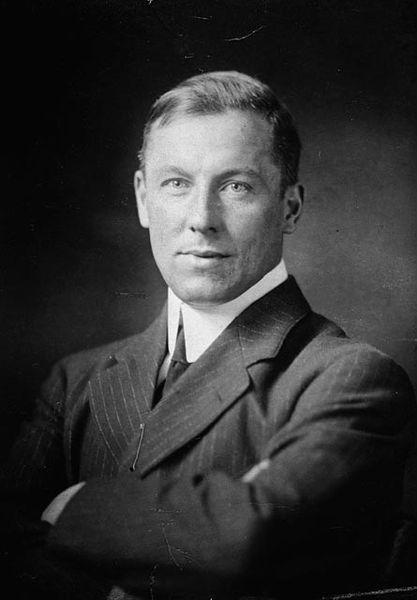
Robert W. Service
A contemporary of American novelist Jack London (White Fang, The Call of the Wild―also great adventure tales), Service wrote the poems that made him famous about the Gold Rush of the late 1800s. Originally Scottish, Service was an adventurer from a young age. He traveled and worked at various jobs in North America, eventually landing work as a banker in the wild north. His poetry―he actually preferred to call it “verse”―is often compared to (or dismissed as) similar to Rudyard Kipling’s in tone, audience and meter.

But the thing that captures me most about Service’s many poems about the Yukon is his sense of adventure. Consider the opening to “A Rolling Stone,” published in 1912.

There's sunshine in the heart of me,
My blood sings in the breeze; 
The mountains are a part of me,
I'm fellow to the trees.
My golden youth I'm squandering, 
Sun-libertine am I; 
A-wandering, a-wandering
Until the day I die.

Service’s poems also brought the world a cast of characters―sometimes desperate―who acted out the dance of life in sub-zero conditions. One of his first famous poems, “The Cremation of Sam McGee,” (1907) tells the story of the death of a gold miner:

Now Sam McGee was from Tennessee, where the cotton blooms and blows.
Why he left his home in the South to roam 'round the Pole, God only knows.
He was always cold, but the land of gold seemed to hold him like a spell;
Though he'd often say in his homely way that he'd "sooner live in hell".

Southeast Alaska. Photo by Beth Green

Having lived in Alaska, I feel that his poetry also illustrates the beauty of North America―particularly Alaska, British Columbia and the Yukon―better than any other writer I’ve read. My favorite example of this is his epic “The Spell of the Yukon,” published in 1907.

The Spell of the Yukon

I wanted the gold, and I sought it;
   I scrabbled and mucked like a slave.
Was it famine or scurvy―I fought it;
   I hurled my youth into a grave.
I wanted the gold, and I got it―
   Came out with a fortune last fall,― 
Yet somehow life’s not what I thought it,
   And somehow the gold isn’t all.
A glacier. Photo by Beth Green
No! There’s the land. (Have you seen it?)
   It’s the cussedest land that I know,
From the big, dizzy mountains that screen it
   To the deep, deathlike valleys below.
Some say God was tired when He made it;
   Some say it’s a fine land to shun;
Maybe; but there’s some as would trade it
   For no land on earth―and I’m one.


You come to get rich (damned good reason);
   You feel like an exile at first;
You hate it like hell for a season,
   And then you are worse than the worst.
It grips you like some kinds of sinning;
   It twists you from foe to a friend;
It seems it’s been since the beginning;
   It seems it will be to the end.
I’ve stood in some mighty-mouthed hollow
   That’s plumb-full of hush to the brim;
I’ve watched the big, husky sun wallow
   In crimson and gold, and grow dim,
Till the moon set the pearly peaks gleaming,
   And the stars tumbled out, neck and crop;
And I’ve thought that I surely was dreaming,
   With the peace o’ the world piled on top.
The summer―no sweeter was ever;
   The sunshiny woods all athrill;
The grayling aleap in the river,
   The bighorn asleep on the hill.
The strong life that never knows harness;
   The wilds where the caribou call;
The freshness, the freedom, the farness―
   O God! how I’m stuck on it all.
The winter! the brightness that blinds you,
   The white land locked tight as a drum,
The cold fear that follows and finds you,
   The silence that bludgeons you dumb.
The snows that are older than history,
   The woods where the weird shadows slant;
The stillness, the moonlight, the mystery,
   I’ve bade ’em good-by―but I can’t.


Mountains above Juneau, AK.
There’s a land where the mountains are nameless,
   And the rivers all run God knows where;
There are lives that are erring and aimless,
   And deaths that just hang by a hair;
There are hardships that nobody reckons;
   There are valleys unpeopled and still;
There’s a land―oh, it beckons and beckons,
   And I want to go back―and I will.


They’re making my money diminish;
   I’m sick of the taste of champagne.
Thank God! when I’m skinned to a finish
   I’ll pike to the Yukon again.
I’ll fight―and you bet it’s no sham-fight;
   It’s hell!―but I’ve been there before;
And it’s better than this by a damsite―
   So me for the Yukon once more.
There’s gold, and it’s haunting and haunting;
   It’s luring me on as of old;
Yet it isn’t the gold that I’m wanting
   So much as just finding the gold.
It’s the great, big, broad land ’way up yonder,
   It’s the forests where silence has lease;
It’s the beauty that thrills me with wonder,
   It’s the stillness that fills me with peace. 

Southeast Alaska