Showing posts with label mysteries. Show all posts

Friday, March 22, 2013

Off The Beaten Track--Why Write About England?

We're pleased to host author Jeri Westerson today as our guest poster. Jeri seems permanently ensconced in fourteenth century England, writing about Crispin Guest, her hard-boiled medieval detective in her latest medieval noir BLOOD LANCE, in print, ebook, and audiobook. For a series booktrailer, go to her website www.JeriWesterson.com.


Mystery authors like to choose the locations of their stories carefully. I know authors who choose certain cities and towns intentionally so they can build in a readymade readership. Readers like recognizing the café they frequent or the hair dresser or the main street the protagonist finds the body.

Other authors will choose a place and change it subtly to work with the landscape they need in their stories. Santa Teresa is a stand-in for Santa Barbara in Sue Grafton’s Kinsey Millhone series, for instance.

But I chose London. And not just any London, but a fourteenth century one. Now although London is a real place, the fourteenth century London is long gone. I know that we think of England as eternal and unchanging, but a city like London, even with its few remaining Dickensian streets, has changed a lot. Two great fires saw to that along with just the regular amount of tearing down and building up.

I have a few copies of maps from about the early fourteenth century and a stunning one from the sixteenth century. What enthralls me about these two maps is how much London grew in two hundred years and how much it also remained the same.

London began as a Roman settlement—Londinium—but even before the Romans arrived, the prehistoric natives had sporadically settled in the area. William the Conqueror, the last successful invader to England, secured the Anglo-Saxon walls around the city and built his keep within it. We know this keep today as the Tower of London. The walls of Anglo-Saxon London stretch from Ludgate and Newgate to the west, to Cripplegate and Bishopsgate in the north, Aldgate in the east, and Dowgate in the south. Over the centuries, farmland began to be gobbled up for more and more city dwellers, well outside the city’s original walls. And the Thames, once its own sort of border, became merely one more thoroughfare, cutting the city in two. The north side was where all the main attractions were and the Bankside in Southwark, was traditionally the place where the brothels and low-life’s lived. Since actors were also considered low-lifes, the southbank is also where they put the theatres in Shakespeare’s day.

By the sixteenth century, we can see how much the city had spread outward. The city of Westminster was only a few miles from the heart of London. But London encroached so much into the land between, that there is no telling where London leaves off and Westminster begins. And Westminster is where the kings had their palace, the footprint of which is covered today by the Parliament buildings where Big Ben’s Tower stands.
I am attracted to the long-lived history of England. And I gave a clue to that in a paragraph above. I stated that William the Conqueror was the last successful invader of England…and that was almost a thousand years ago. I don’t think any other country in the world can boast of that.

And it is that settled history that allows for traditions to carry on to this day. England had a brief period during their civil war in the seventeenth century where they abolished the monarchy (curse you, Oliver Cromwell!) but the people, having had enough of the Lord Protector’s puritanical attitudes, brought it back. There is a ceremony in the Tower of London where they perform to this day the oldest continuous military ceremony—something that they’ve been doing at the Tower for seven hundred years—called the Ceremony of the Keys, where a warder of the Tower locks all the castle’s gates in a procedure that takes ten minutes. And he--or someone like him--has done this every single night for the last seven hundred years. The warder was only slightly late once during World War II when London was being blitzed by the Germans. A bomb fell close to the Tower and the warder and his guards had to duck for cover…and then they proceeded on with it. They sent an apologetic note to the king. Now that’s tradition, people.

And I love that. I love the continuity of the English. I love that they love their pomp and traditions and have maintained them for generations. There will always be an England, or so it seems. And it’s fun to write about it and have my fictional protagonist Crispin Guest wade into the real history and make a home for himself there. I love that I can look at a fourteenth century map of London and put his dwelling on a real street and then look on Google Earth and find that same street still there. I giggle with delight at such permanence because I live in southern California, where even the ground doesn’t stay in one place all the time. Oh for permanence!

Wednesday, January 16, 2013

MONKEY LOVE AND MURDER Launches Today!


Can you hear that? The applause, the ululation of the crowds?

Here at Novel Adventurers we’re throwing a virtual party—it’s the launch date of MONKEY LOVE AND MURDER, the debut novel from our very own Edith McClintock.


MONKEY LOVE, published by Five Star, takes place in Suriname and follows the adventures of Peace Corps Volunteer Emma Parks. In Library Journal’s view:

“This romantic-suspense debut is perfect for those seeking adventure mixed in with their mystery. McClintock creates a vivid jungle environment, a perfect venue for a closed-room mystery. Her characters run a little larger than life, making the story feel like a reality TV show. With a bit of Scott Smith’s tone, this would work for Hilary Davidson fans too.”

And from Kirkus Review:

“This debut from McClintock, who served in the Peace Corps and worked on a monkey research project, has the ring of authenticity, along with romance and a mystery that keeps you guessing.”
Regular blog readers will remember Edith, who’s been blogging with the Novel Adventurers since November 2011, for her posts about Suriname, Spain, Miami, and Eurasia. When not blogging about her travels or crafting fiction on Suriname or Miami politics, Edith works in conservation and development.
Congratulations, Edith!
Image by balloon storyteller/Flickr.com
So, while we’re all celebrating Edith’s achievement, now’s a perfect time to take a look at the sample chapter available on her website, like her Facebook page, and certainly, order a copy of MONKEY LOVE AND MURDER from Amazon, Barnes and Noble, or The Book Depository.
Congratulations, Edith!

Friday, December 14, 2012

Off the Beaten Track: I Came to Casablanca for the Waters


We're pleased to have writer Jake Needham as our guest blogger this week. Jake is an American crime novelist who lives in Bangkok. His crime novels set in contemporary Asia include: THE AMBASSADOR'S WIFE, A WORLD OF TROUBLE, KILLING PLATO, LAUNDRY MAN, and THE BIG MANGO. His latest Inspector Tay novel, THE UMBRELLA MAN, will be released next month. The print editions of Jake's novels are distributed only in Europe, Asia, and the UK, where they have all been bestsellers. Happily, the e-book editions of his novels are available worldwide. Jake has lived and worked in Asia for over twenty-five years. Read more about Jake's books at his website, http://jakeneedham.com.
            
When I am in the United States and my city of residence comes up in conversation, I am usually asked — and almost always in a tone laden with wariness and suspicion — why in the world I am living in a place like Bangkok.

Bangkok. All photos courtesy Jake Needham.
Sadly, I cannot simply reply with Humphrey Bogart's famous line when he was asked how he came to be in Casablanca. I can make no claim to being misinformed. I had lived in Asian cities for a long time before I took up residence in Bangkok, and I knew exactly what I was getting into.

I have come in a perverse way to look forward to this track conversations with my fellow Americans seem to take whenever they learn that I am living in Bangkok. Instead of expressing curiosity about my life in the distant and exotic city that I call my home, my interlocutors seem far more intent on telling me what they think of the place.

Of course, very few Americans seemed to know much of anything about any place that is not America, but still it surprised me that I hardly ever meet anyone back in the United States who has anything at all to say about Bangkok, other than on one of two topics.
Food is one of those topics, naturally. Everyone claims to love Thai food. Going out for Chinese is cheap. Going out for Thai seems somehow hipper. Of course, most Westerners have no real idea what they are actually eating in either case, but Thai food is both cheap and hip, so how can you beat that?

The other topic, as you might guess, is sex. Bangkok is inexorably linked in most people’s minds with stories they have heard somewhere -- although I notice few people admit to remembering exactly where -- of an unabashedly dissolute life and the ready availability of free sex. Well, perhaps not exactly free, but certainly pretty inexpensive sex, at least by world standards. Thai sex is a little like Thai food, cheap but with a kind of exotic style to it. Can’t beat that combination in any context, can you?

With all that going for it, you might think that the idea of me actually living in Bangkok would be pretty interesting to most people, wouldn’t you? You might think that, but you’d be wrong.
A couple of times I tried joking that, well, a man could sure make a lot worse choice than taking up residence in a city that is internationally famed for food and sex. But when I saw the solemn expressions that crack generally engendered in most Americans, I swiftly eliminated it from my repertoire. Maybe the suggestion that food and sex are important parts of life makes Americans uncomfortable. Maybe I ought to have more friends from France.
Anyway, the inevitable view people express when they find out that I live in Bangkok is something I have learned to live with. Oh, the place is no doubt interesting, people murmured, but yet . . . somehow it's still a city where a lot of people go who aren’t particularly…well, nice.

To be absolutely honest with you here, I have to admit that perception isn't really too far off the mark.

I have often thought there has to be some kind of international network devoted to coaxing social rejects and dropout cases worldwide into coming to Bangkok, because come they do. By the thousands, they walk away from third-shift jobs in places like Los Angeles, London, Berlin, and Toronto, pack what they have, buy a cheap airline ticket, and make their way to the Land of Smiles.

Some are looking for a cheap tropical paradise; others hope they’ve joined a nonstop orgy; but almost every one of them is intending in some way to make a fresh start on a life that until then had very little to recommend it. Many of these refugees from reality probably couldn’t have located Bangkok on a map before they decided it was the place for them, maybe they still can’t, but now Bangkok had become their last, maybe their only hope.
In the empty hours, this army of the dispossessed takes control of the part of the city where most foreigners live. Tuk-tuks, little three-wheeled motorcycle taxis, fly back and forth most of the night ferrying carousers between the two clumps of bars that anchor the neighborhood: Nana Plaza on the west and Soi Cowboy about a mile to the east.
They are all there. The lonely, the frightened, the guilty, the lost, the vulnerable, the depressed, and the psychotic. Soaked with sweat, they rush back and forth from one bar to another, reeking of that peculiarly sour, metallic odor habitually given off by the emotionally overmatched and underachieving.

So, I hear you ask, how in the world did you end up in Bangkok?

It happened this way…

Back a couple of decades ago now, HBO hired me to produce a movie they were making from a screenplay I had sold them. It was to be filmed in Bangkok and, since I lived in Asia and presumably knew something about it, they thought it sensible to add me to the corps of so-called producers that every movie drags around behind it like a modern version of the old time camp followers that every army attracted.

Regardless of HBO’s wisdom in putting me on the payroll, I must tell you now that I am grateful beyond measure that they did.

The woman who is now my wife was born in Thailand and educated in England (thank heaven it wasn’t the other way around). She was doing a stint at the time as the editor of the Thai edition of the UK magazine, Tatler, and she came out to the set one day to interview me. A year later we were married. Twenty years later, we have two sons and are still living in Bangkok .

So there you have it. That is how I came to be resident in a city that most Americans seem to think of as little more than adult Disneyland for the dodgy and the disreputable. Only with better food.

Admit it. You're actually a bit disappointed, aren't you? Maybe you expected something a little more…well, spicy?

I rest my case.

Wednesday, August 1, 2012

Books that Feel Like Summer


By Beth Green

For the last few months, I, ever the book lover, have been hunting down and web-snipping lists of “summer books.” As happens every year, celebrities, newspapers, National Public Radio and many blogs have weighed in on what they consider summer reads. Like Santa Claus, I’ve been checking them twice―looking for that elusive, definitive, capital-L List of books guaranteed to whisk me off to fantasyland on an e-ink carpet.

I haven’t found that List yet, but I discovered a few worth mentioning here.

For example, Slate.com has a list of books for the beach, about the beach.

The NPR has many lists, including lesser-known books for kids’ and teens’ books, and funny ones too for summer.

A chapter of the Sisters in Crime mystery writers' group (all of us Novel Adventurers are proud SinC members) has provided a list ofbeach-worthy reads written by authors in the group.

Perusing these lists and compiling them into my own List made me ponder what a “summer read” really signified for me.

Before starting high school, I was home-schooled and read non-stop, no matter the season. When I entered public school, I welcomed the summer months as a time when I could read something for pleasure, school weeks being hectically full of social activities. During summers in high school, I practiced Spanish by reading Harlequins from the bilingual section of the library and rummaged through garage sales for ten-cent books. At university, I decided summer reads should be more Educational (yes, thinking of it with a capital E), and I slipped into all the classics I could find: Anna Karenina, Thornton Wilder’s plays, Chekov, ancient Greek poetry, Ayn Rand, and a lot of literature that I’m glad I read but perhaps didn’t so much enjoy reading.

But, after my school days, it’s been hard for me to keep track of what books I’ve read in what season. Books snatch me up and carry me so far away from my normal life on their storylines that, while I realize that I must have been in some way aware of the passing of the seasons, I don’t connect it to the book I was reading at the time. It’s my favorite part of reading for pleasure―the journey outside my here and my now to wherever the writer has mandated.

So, I’d like to offer my own short list of books to the panoply of (probably better) lists on-line. The books I’ve selected perhaps at first glance seem dissimilar. They don’t fit in a particular genre and probably wouldn’t attract the same readership. But all of them are about getting out and doing the things we all want to be doing during the summer. They, at least in me, stirred up that last-day-of-school tingle of excitement.

Even if you haven’t got the time to sit down and read these books before summer greenery turns into autumn’s yard work, they’re worth finding and keeping aside until winter (or perhaps just until a forlorn bad-weather day that needs a touch of sunshine) because, if you’re like me, they will transport you to an endless summer.

1. Beach Music by Pat Conroy

I did read this book during summer―when I was still in school. Now, more than 10 years later, I remember the passages about food and the way Conroy evoked the feeling of walking on the beach, at night, even though I was actually on a bus, driving through the rain, on my way to a summer job.

2. The Sun Also Rises by Ernest Hemingway

Perhaps because he wrote it during the summer, this, more than Hemingway’s other novels, pulls me into summertime feeling. The parties, the travel, the crazy nights―it all spells s-u-m-m-e-r.

3. Eat, Pray, Love by Elizabeth Gilbert

I get laughed at every time I mention this travelogue to my bookworm friends, but I will continue to sing its praises. In the summer, who doesn’t want to jet off to Italy for pasta and romance, to India for some spiritual cleansing, and to Bali for enlightenment and, yes, more romance?

4. Across China by Peter Jenkins

Travelogues almost always make me feel summery, so that’s why I’m including two on this list. This thick description of Jenkins’ trip to China when the country was just beginning to ‘open’ to foreign influences again is a pleasure as much for his physical journey from his farmhouse and pregnant wife to the Mt. Everest Base Camp as it is for his emotional journey as he sees and experiences new things.

5. The Vision by Heather Graham

One of my favorite warm-day activities is scuba diving. So, I knew I was going to like it when I picked up this paranormal mystery. Graham serves up plenty of scuba adventures, a strong female lead character, and a great backdrop of the Florida Keys. Sounds like sunny vacation time to me!

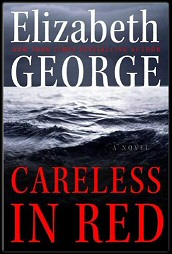
6. Careless in Red by Elizabeth George  

I do love a detective-on-vacation story and this one and the next book on my list are good both for thrills and for vicarious traveling. In this novel, George’s main series character, Thomas Lynley, seeks the remote Cornish coast to help him recover from the loss of a loved one (trying not to put in any spoilers for those who haven’t started the fantastic Lynley series). Though the fog-swept bluffs and rocky beaches described in the book won’t make everyone’s heart sing “summer,” I certainly got the feeling I was on vacation while reading.

7. The Web by Jonathan Kellerman

A different type of holiday is in store for amateur sleuth (and professional psychologist) Alex Delaware, Kellerman’s main series character, when Delaware accepts a short assignment on a tropical island in the Pacific. The island itself may be a figment of Kellerman’s amazing creative powers but it doesn’t feel like it while you are reading the book. The foliage, the beaches, the reefs…if you want an island vacation but your budget doesn’t, this book is a quick way to get a taste of beach-side living, with a thrilling storyline to boot.

What books make you feel like summer?