Monday, October 8, 2012

A Shrine in the Desert: Qom’s Golden Lady


Shrine of Fatimeh Masoumeh in
Qom, Iran

By Heidi Noroozy

The information director of the Holy Shrine of Fatimeh Masoumeh in Qom nearly fell off his chair in astonishment at my husband’s request.

“You want to know about the history of this place?” He narrowed his eyes skeptically.

“That’s right.”

“No Iranian has ever asked me that before. Most people come here to pray and then leave again. They don’t care about the building.”

“Can you arrange for a guide?” my husband persisted. “One who speaks English, if you can manage it.”

The director spotted me hovering near the door—my pale, American face peeking out from under a badly draped chador—and he immediately understood. He grabbed his coat, led us into the courtyard outside his office and spent the next hour delivering a lecture on the history and architecture of Iran’s second most important pilgrimage site. The top honor goes to the Holy Shrine of Reza, the eighth Shi’ite Imam (or leader of the faith), in the city of Mashhad.

Qom is the final resting place of Imam Reza’s sister, Masoumeh, also known as Fatimeh, who died and was buried here in 816 A.D. She’d been on her way to visit her brother in Khorasan, a province on Iran’s northeastern border, when she stopped to rest in Saveh, where enemies slipped poison into her food. Too ill to continue her journey, Masoumeh was brought to nearby Qom, where she languished for another 17 days in the home of a prominent citizen before succumbing to the poison.

The shrine’s current structure dates back to the Safavid Dynasty (1501−1736). Over the centuries it has grown into a sprawling complex of four courtyards, six minarets, three balconies, three mosques, four porticos (i.e., covered buildings attached to the burial chamber), one gold dome, and another made entirely of stone. On the day we visited, the scent of roses perfumed the air because the gleaming marble walls had been recently washed with rosewater, a sacred tradition that dates back to pre-Islamic times.

Twenty years ago, the authorities determined that the original gold plate covering the central dome was too thin and fragile, so they replaced it with thicker sheets attached to copper bricks. The project required 400 kilos (881 pounds) of gold and cost 25 billion rials (around US$2 million).

Two of the minarets are much shorter than the rest. They were toppled in an earthquake 250 years ago and were rebuilt at half the height to prevent them from collapsing in the next natural disaster.


View of the Mirror Balcony
After the Islamic Revolution in 1979, the authorities made several changes aimed at eliminating traces of the previous monarchies. They sealed up royal burial chambers and removed a huge stone beam beneath the Mirror Balcony, the entrance to the women’s sanctuary. This project was a major and highly risky engineering feat that required jacking up the entire structure and replacing the enormous block with another. They did this because the carvings on the original beam featured angels with flowing hair and bare breasts, a common motif in the 19th century Qajar period but offensive to the more conservative 20th century mullahs. Part of the original beam was relocated inside the women’s sanctuary, visible to women but hidden from male eyes.

Only one overt reference to the shrine’s royal past remains—a plaque high up on the clock tower in the Atiq Hayat, or the Old Courtyard, which bears an inscription proclaiming the greatness of the Qajar monarchs. The architects charged with renovations determined that the plaque could not be removed without destroying the historic clock, and so it remains in place.

At the heart of the shrine lies the burial chamber known as the zarih. It houses Masoumeh’s coffin, draped in richly embroidered cloths and encased in a huge glass and silver cage. The hall around it is divided into two sections, one for men and the other for women. Through the thick, green-tinted glass panels, the people on the other side look like shadowy figures moving slowly back and forth.

There are rules in the shrine. Women must wear chadors, even in the private sanctuary where no men are present. Everyone is supposed to speak quietly and act with proper respect for the sacred site. And you take your shoes off at the entrance to avoid soiling the lush carpets covering the marble floors.

The shrine has rule enforcers to lay down the law. They are men and women who wander through the crowds, holding long blue poles that look like enormous feather dusters. At first, I thought they were supposed to tap violators with the feathery fronds, but I never saw them actually touching anyone. Instead, their reprimands were low key. A couple of times, a woman enforcer came to me and whispered in my ear, “sister, you are showing too much hair.”

Burial chamber (zarih)
She failed to mention another wardrobe malfunction: the fact that my chador was on inside out. Apparently, wearing the garment this way is a sign that the wearer is looking for a husband. The helpful woman who pointed out my error was being kind in that Persian way of not saying precisely what you mean. In fact, a woman with her chador reversed is offering herself in sigheh, a temporary marriage contract that can last as little as an hour or as long as a lifetime.

My rescuer helped me turn the chador around, and then she asked for a favor in return. Would I offer a prayer to Masoumeh on behalf of her husband, who was dying of cancer? Because I was a first-timer to the shrine, she explained, my prayers would rise above the cacophony of desperate petitions and reach the ears of the saint. How could I refuse?

By the time we left the shrine in the late afternoon, I’d said prayers on behalf of 10 different women, all of whom had terminally ill husbands, parents, or children. While the grace and glitter of the shrine’s architecture are memorable enough, the human stories of suffering and hope I heard throughout the day will remain in my mind far longer.

Friday, October 5, 2012

Off the Beaten Track: Diary from Antarctica

Our guest today is Adam Lutchansky. Adam lived in Juneau, Alaska, from birth until age 17, when he traded rifles and skiffs for palm trees and a NASA project at Harvey Mudd College in California.  After graduating with an engineering degree, Adam did research for a startup in Anchorage, turned wrenches on small cruise ships in Baja, helped construct a marine research lab in Juneau, and supervised maintenance of part of the oil spill response fleet in Valdez.  His willingness to work with his hands and take project-duration employment allowed him by the age of 25 to have visited all seven continents and to have lived and worked on four of them.  He'll be returning to Antarctica this austral summer for a four-month contract. The following is excerpted from his blog of his first experiences on the southernmost continent, Adam Down South.


Flight to the South Pole
30 Aug., 2007
Ten days on the ice so far. Already I've lost a linear conception of time - some of the days have slid by without interest; some were so intense as to warrant memorization. The best measure of time passed is the length of the days. The last time I checked, we were gaining half an hour of visible light every day. McMurdo Station is at about 78 degrees latitude, and at such extreme positions the winters and summers are exaggerated and the spring and fall are abbreviated. This is because the poles are usually either constantly exposed to the sun or constantly exposed to darkness. Each season is a study in a particular part of the day: summers, with the sun circling constantly overhead, are daytime. Winters, night. It is coming into spring now, and although the sun spends a minority of time above the horizon, every minute of daylight is a sunrise or sunset. The sun moves low, horizontally, heavily. The effect is ridiculously beautiful…

Work buildings at the South Pole station, which Adam visited

12 Sep., 2007

Nine hours, 46 minutes of sunlight. We're gaining only 15 minutes a day now, but the sky is clear and the sun is slanting through the shutters of the power plant and lighting the generator motors with a wide-spectrum glow, vibrant under the large sodium lights that otherwise illuminate the generator room with a tranquilizing orange.

Despite my temperature gauge hitting -20F, the sun is inescapable this afternoon, and for the first time the impossible legend of continuous summer sunlight hammering UV-saturated rays on the dry snow has gained some feasibility. It is piercingly dry here, and the sterility of the surroundings often feels absurd for such an exotic place. There won't be above-ground life anywhere near McMurdo Station for a couple of months, and never will there be the huddled lichens, gnarled trees, and anemic, short-lived flowers one associates with summer in a desolate place. There is nothing now but ice and sky, rocks and wind, and the Station.

The weather has been hit-and-miss here. When I arrived on August 20, we stepped out of the cargo plane, windowless but for a couple iced-up portholes, onto grainy, plastic snow, and choked on air measuring -33F. The sky was clear though, and with the sun only a couple degrees above the horizon we had a moment to take in the vivid majesty around us - the surrounding plain of snow that covers the sea, and the pink and purple mountain ranges that circled the distant horizon, clearly visible to 50 miles. The next day visibility was only a few hundred feet as a small blizzard moved in, and the day after that was once again clear. There is nothing here to impede the weather, and it changes fast. When we landed, our plane never shut down its engines, anxious to regain the security of altitude.

August and September are considered the coldest parts of the year at McMurdo…
Adam at the South Pole

…with 350 people now at McMurdo Station, the population seems slightly higher than the perfect amount. The dining hall is just slightly too crowded for a quiet meal, the video selection is often thinned out, and I've met far more people than I can recall having met. I spent my first couple weeks just smiling and saying hello to everyone I saw, abandoning any effort to figure out who I was supposed to know.

Despite living with 350 people now and preparing to live with 1000+, the people living here want to be here, and everyone makes sacrifices for the opportunity, so the social atmosphere is very friendly. Mainbody [busy season] takes a bit of getting used to I'm told, but once one gets into the proactive mood, it's supposed to be a damn good time. For now, however, the idea of more people arriving inspires in most of us WinFly personnel [workers who came earlier] feelings of apprehension and xenophobia.

Even before I secured a job at McMurdo, I'd heard a lot about the place, mostly people who had passed through the station. The few people I'd met who actually lived at McMurdo described it as a bustling, interesting, and crowded outpost, whereas the people who were here as transients painted a grim picture of dust storms, decrepit buildings, alcoholic inhabitants, and a lack of activities. The fact of the matter however, is that this is not a place to be a visitor. To minimize the environmental impact, there's a limited amount of turf at McMurdo, so rooms are fairly small, the gyms and bars are crowded during peak hours, and the recreational resources are hidden away in whatever space could be spared. During the summer season (a.k.a. mainbody), this place gets crowded, and the male to female ratio is about 2:1, causing all the men to develop an instinctual frustration with the arrival of any additional men. So when any people at all show up at McMurdo for a few days complaining about conditions which are further aggravated by their own arrival, I can understand that no residents are keen to share with transients the best hours for certain activities, the word-of-mouth opportunities, and the hidden gems that make this a great place to live. Transients are left with nothing to do but to mull over reasons to leave town…

Transport between stations
22 Dec., 2007

The tilt of the earth's axis has reached a fully reclined position, summer has swept south to McMurdo, and life is easy. Today is the austral summer solstice, and for the past few days the sun has been rotating around us at a nearly constant angle, never dipping or rising, just spinning around us at a lazy glancing angle, while all the shadows pace around in circles. Daytime temperatures were recently staying above 40F and people were walking and working outside in t-shirts. Anyone showing bare skin outside must regularly baste themselves in suntan lotion to avoid frying their skin under the rotisserie of the infinite daylight, burning raw with UV rays spilling through the ozone hole above.

Activity at McMurdo is at its peak, and the station is fulfilling its role as the continent's premium logistical, scientific, and transport center. We host 20 or so airplane flights a day but our runway on the sea ice immediately adjacent to the station has melted away, the ice too thin to handle any traffic, and all airplane operations have moved to our two more distant fields. Fifteen or so miles out of town, Pegasus Field has reopened and hosts heavy wheeled aircraft such as the C-17 turbofan transports, each C-17 being almost the exact size of Scott's ship HMS Discovery, arriving now three times weekly from New Zealand…
Penguins

…The weather for weeks has been warm enough to enjoy a beer outside and to go running with bare arms, but yesterday we got our first snow and cloud cover in weeks, and it was a beautiful relief from the oppressive regularity of blue skies. The temperature of the air and snow was too high for the snow to stick to the ground, but the thick assault of flakes came down as large wet wads, falling white but smashing transparent against the earth. I wandered into this assault with several friends and a haphazard nonchalance, catching the flakes on our tongues and giving refuge to the flakes on our shoulders.


Thursday, October 4, 2012

In the Leg

By Patricia Winton

A few years ago, a man trying to convince me to give a class I didn’t want to teach for less money than I wanted to earn, said, “Ma sei in gamba, tu.” I didn’t understand the expression. Literally, it means “but you’re in the leg,” so I knew I was in uncharted territory. The flatterer trying to urge me to accept his proposal, as it were, said it meant, “you’re an expert” or “you’re good at what you do.” I was skeptical, so I asked other people about the phrase.

One man said he might tell a woman that she’s pretty, sweet, and definitely “in gamba.” That might mean she’s smart but also goes a step farther, as in she’s on the ball or on top of things.

A student described her grandmother as 75 years old but still in gamba. That means, I think, that she still has all her marbles. My student was uncertain. Bilie, the word for marbles, didn’t compute for her. “Ah,” she said at last. “Ha tutte le sue rotelle.” That means she has all her castors (wheels on the bottom of rolling chairs). A perfect match. But, we determined, to be in gamba could refer to a physical as well as mental state. Therefore, her grandmother could still be “spry” or “alive and kicking.” By the same token, you could say I feel in gamba like a twenty-year-old to mean I feel as active and alert as a twenty-year-old. The origin of the phrase may come from describing someone’s state of health: he’s been sick in bed, but now he’s in gamba (he’s on his leg or he’s out of bed).

One woman said she’s looking for un uomo in gamba (a man in the leg). That means she’s looking for a man who would make a good husband. “There are lots of men out there,” she said, “who are handsome and fun to spend time with, but who are definitely not in gamba.” She wouldn’t marry one of them.

Another friend told me that Italians often use in gamba to offer encouragement. For example, if someone is going through a bad time or facing a difficult challenge, a friend might offer “mi raccomando…in gamba.” It would mean, “hang in there” or “chin up.”

Mi raccomando is a whole nother expression with endless meanings. A reflexive form of the verb raccomandare (to recommend), it is often used alone, as in mi raccomando. If someone is facing a challenge or a test, you might say “mi raccomando:” good luck, or I’m rooting for you. It could also mean “Do your best.”

Sometimes, it can mean “please.” Be careful, mi raccomando (be careful, please). In fact, it would mean “Do be careful, please,” for emphasis. Or it can mean, I beg you, mi raccmando a te non farlo—I beg you not to do it.

I didn’t teach that class, but I learned something from the negotiation.

Please join me at Italian Intrigues on alternate Thursdays where I write about all things Italian. Next week, guest blogger Estelle Jobson, who blogged for us here on Novel Adventurers earlier this year, joins me to share an excerpt  from her new book, Finding Rome on the Map of Love.

Wednesday, October 3, 2012

The Cat-Head Bird, and other Language Monsters

By Beth Green

One of the great joys of travel, for me, is exploring the way one group of people can take a fairly simple thing and look at it in a completely different way than their neighbors.

You can get a glimpse of this, without learning another language, simply by traveling and reading translated signs.

My oldest memory of how quirky languages can be dates to when I was about six and my family lived in Puerto Rico.
Photo by missteee

We’d gone to San Juan for a short trip—I can’t remember why—but I remember the sign in the ferry cabin: “Lifeguards under seats.”

In Spanish, the words for “lifejacket” and “lifeguard” can have the same base word: salvavidas.

Much later, when I’d moved to Europe to be an English teacher, I collected various idiosyncrasies, wrote them in notebooks and hassled my students with them by calling them “learner errors.” It is, of course, an error for a student of English to refer to going to “the nature,” instead of simply “the countryside.” But saying, “this weekend I was in the nature,” brings me a completely different—and richer—mental picture than does “this weekend I was in the countryside.”

My students weren’t the only ones making errors, either. More than once in the Czech Republic I made waiters laugh out loud by ordering “kočka”—cat—soup instead of “čočka”—lentil—soup. (In Czech, the č makes a sound like the English “ch”.)
Photo by Doug88888

But my appreciation for just how much lateral thinking there is between languages and in translation blossomed when I moved to China and began to study Mandarin. Because of the way the language is structured—most often with one- or two-syllable blocks, each syllable conveying a meaning—the definition of a word is often quite literal.

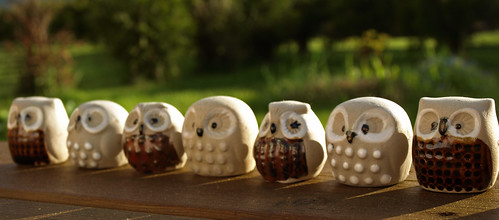
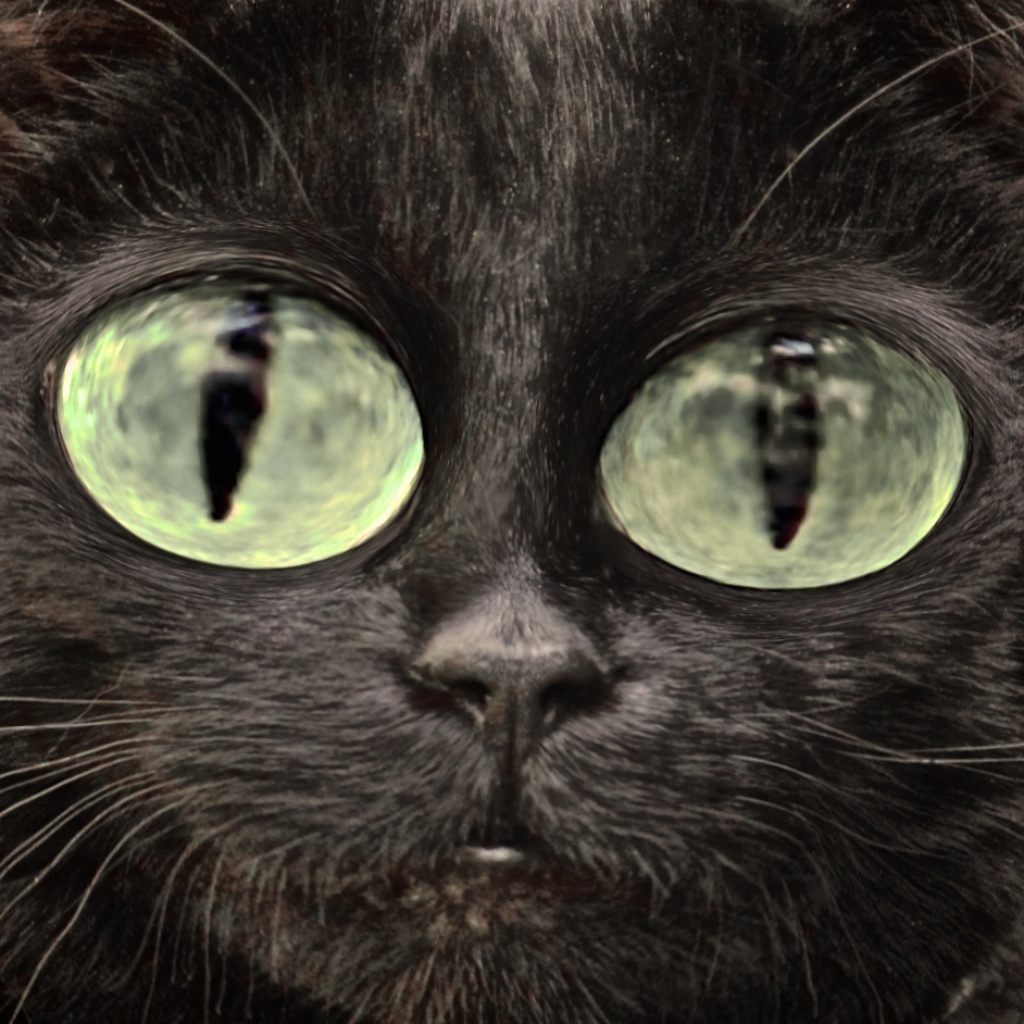
Take owl, for example. These nocturnal birds are found all over the world, but only in China are they referred to as “cat-head birds.” (Mao tou ying, 貓頭鷹). The ever-lovable panda’s name is also a literal mash-up of the cat and another animal: xiong mao,熊猫, or “bear-cat.”

In English, when we name a new invention, we often pull names from Greek or Latin roots, or perhaps add an abbreviation to it (e.g. e-book.) In Chinese, they often just make a new combination of already existing words. Train is “fire vehicle,” airplane is “fly machine.” Telephone is “electric talk,” while mobile phone is “hand machine.” You can imagine some of the headaches people must go through when trying to find a new, suitable, name for an invention. And, later, the problems translating it.

Photo by jeffbalke
I don’t mean to poke fun at these languages for having amusing words—we in English have enough trouble communicating among ourselves sometimes. A few years ago my partner, who is Australian, came with my parents and me on a road trip in the Western US. We had just come from Las Vegas, Nevada, where he’d been introduced to a lot of new Americana. The next morning we stopped at a diner in California before heading farther north. We all selected something from the breakfast menu, and were eating happily (I thought) when Dan put down his fork and knife with most of his food uneaten.

“What’s the matter?” I asked.

“I’m worried about my food,” he said. “I ordered chicken fried steak, but this doesn’t taste like chicken.”

Tuesday, October 2, 2012

Stone The Crows, I'm Flat Out Like A Lizard Drinking*

By Alli Sinclair


When I send an email to my non-Australian friends, sometimes I think I should include a glossary of terms. It’s common for me to receive a reply with “please explain” asterisks dotted throughout the document. I certainly know what “proper English” is. After all, I’m qualified to teach English as a second language. But when it comes to casual letters or conversations, I let my Aussieness show through and that’s when the fun begins.

In fact, it reminds me of when native Spanish speakers taught me their language and had a ball messing with my head. They’d teach me all sorts of loopy phrases that I innocently learnt and then tried out on their parents. The raised eyebrows and dropped jaws made me realise I’d just made a clanger. Mind you, my friends would be on the floor, rolling around in fits of laughter.

I do get the chance to turn the tables every now and again and yeah, I can see why my Spanish speaking friends found it so much fun. But when it comes to the serious stuff, like my writing, I need to really think about what I want to write and how I need to write it.

My main characters in my novels are Australian. I like putting an Aussie on the world stage as I find their personalities and lyrical way of speaking interesting and fun to play with. But there are some hazards. The last thing I want to do is have my characters sound like Crocodile Dundee. I love that movie and it did do a lot for Australian tourism, but seriously, we don’t speak like that. Nor do we go for a walkabout in the desert. Well, some people do, but it’s not a regular occurrence. I could go on and on about stereotypes, but that’s not this week’s topic so I better move on!

Because I want to dominate the world and have my books available in every country... actually, scrap that. I want to have them available in every galaxy (yes, sarcasm is a major part of being an Aussie), I have to make sure people can actually understand what I’m writing. If I fill the pages with Australian phrases and terms, no one will understand what I’m writing about. But if I don’t add the odd Aussie saying in, then people think my character is English or American. It’s a fine balance and that’s why I’m so thankful for my wonderful critique partners. They read my work with a non-Australian slant, and they’re smart enough to get what the slang means. But every now and then I put in a curly one that leaves them scratching their heads. It’s a constant balancing act and one I think I’ve got a pretty good grasp on—now.

A lot of Australian slang derives from England, and of course there are many phrases and terms we use that are North American. As you know, Australia is a multi-cultural country, so we also have a lot of words that have been adapted from a myriad of nations. We enjoy adopting foreign words and turning them into our own. I do, however, feel for people who grace our shores for the first time, especially those who have English as a second language. Lina wrote a wonderful post about her adventure in learning English and how difficult it was. Throw some Aussie slang and a thick accent in, and you have a recipe for disaster. But rest assured, Aussies are a friendly bunch who are accustomed getting blank looks after we speak, so we’ll find another way to get the message across, even if it means getting out a piece of paper and crayons.

And of course, I couldn’t finish the post without sharing some of my favourite words and sayings. But be aware, some of these haven’t been used for decades. Go on, give them a whirl!

Cactus: something that is dead, e.g. the bloody TV is cactus

Chook: chicken

Cleanskin: A bottle of wine bought without the label on it. Usually bought from companies that have an abundance of a certain vintage of wine.

Coathanger: Sydney Harbour Bridge

Mad as a cut snake: very angry

Dag: technically the yucky bit that hangs off a sheep’s bum, but in Australia a dag is a funny person

Earbashing: nagging

Feral: hippie

Furphy: false or untrue e.g. she’s told the biggest furphy

Grundies: underwear

Mystery bag: a sausage (also called a snag)

Nuff-nuff:  not very intelligent

Rack off: go away (not that polite)


Root rat: someone constantly looking for sex

Screamer: someone who gets drunk easily e.g. “She’s a two pot screamer” refers to someone who gets drunk on two glasses of beer

Show pony: someone who dresses to impress

Tall poppies: successful people 

Tall poppy syndrome: someone who talks badly about those successful people

Woop Woop: invented name for a small, unimportant town e.g. he lives out near Woop Woop

*Oh my, I am very busy

Monday, October 1, 2012

“Don’t Hurt Your Hand”


Photo by Hamed Saber
By Heidi Noroozy

When my Iranian in-laws first came to stay with us, I decided I needed to learn a few words of Farsi so we could communicate without requiring constant translation. So I asked my husband to supply a few useful phrases—hello, goodbye, please, and thank you, for starters.

What I didn’t anticipate was the slew of options he offered for “thanks”—mersi, mamnoon, motshakkeram, to name but a few. Who knew that there were so many ways to express gratitude?

“Just say mersi,” he advised.

I could get my mind around that one. It was easy to pronounce. Better yet, it was already familiar, having been borrowed from French. But soon I realized that the word sometimes came up a bit short. In a culture that has had millennia to perfect the art of gratitude, often what is said is less important than what is left unspoken. Mersi just doesn’t say enough.

Then I learned this useful phrase: dast-e shoma dard nakoneh. It covers many situations but is usually offered at the end of a meal to thank a hostess for preparing the delicious feast. Literally, it means “don’t hurt your hand.” And the phrase even has a standard response: sar-e shoma dard nakoneh, or “don’t hurt your face.” At first, I thought this was a joke. “Don’t hurt your face?” It sounds like something Groucho Marx might say.

But it’s meant quite seriously. In fact, the exchange is far more than “thank you” and “you’re welcome.” The guest is acknowledging how much hard work went into preparing the meal, which, in Iran, probably took all day and multiple sets of helping hands to prepare. The hostess, in turn, is graciously accepting the praise and expressing her joy at the opportunity to provide such a satisfying meal.

A similar expression took me longer to figure out, partly because it means something different in every situation: khasteh naboshi (literally “don’t tire yourself out”). If followed by a request for a favor, it means “I hate to trouble you, but…” On another occasion, it might be offered in acknowledgement of a favor rendered, in which case it’s more like, “you shouldn’t have gone to so much trouble.” And you might say this even if you were the one asking the favor in the first place.

Things get even more complicated in a situation like this: Last year, when my mother-in-law was recovering from knee surgery and hobbling around with a cane, she couldn’t do her household chores for several months. I pitched in with the cooking and cleaning. At the end of the day, I’d sit down with a glass of tea after the washing up was done, and she’d give me a sad look and say, “khasteh naboshi.” Translation: “thank you and I’m sorry I couldn’t help out.” Gratitude and apology rolled up into one convenient phrase.

Try to pack all that meaning into a simple, easy-to-pronounce mersi.